

That's me in 1997, the year I first arrived in the USA with a heart full of hope and a suitcase full of dreams.
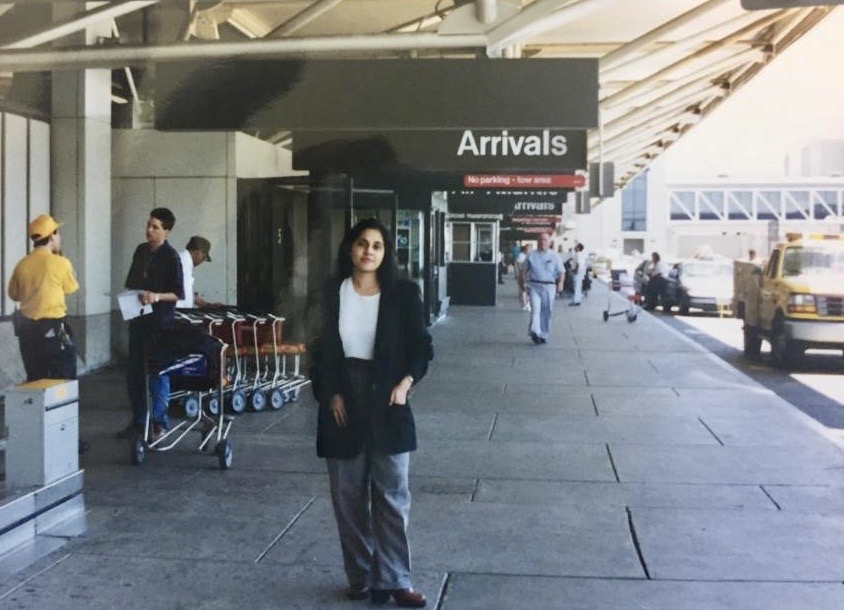
I had left behind everything I had ever known because I believed America was the place where my dreams would come true.
I believed this country would give me a bigger life, and that if I worked hard enough and refused to quit, I could become someone my younger self could not yet imagine.
What I did not understand was how much of that becoming would require loss: the comfort of familiar streets, the ease of being understood without explanation, the version of myself who thought she knew how the world worked.
I could not afford a mattress, so I found one behind my apartment building, carried it home, covered it with a sheet, and slept on the floor. I did not call it suffering then. I called it a place to sleep and dream big dreams.
Later, I stood at an ATM and stared at a $20 balance that would not cover rent. The pit in my stomach felt crippling in that moment, but it also taught me how to be resourceful when you have no resources left to draw on.
Resilience is not something you are born with; it is built every time you choose not to quit. Adaptability begins the moment you stop wishing things were the way they used to be. Dreams become real through the discipline of showing up again and again.
My journey as an immigrant has shaped me more than any credential, title, or achievement ever has.
We may not all cross national borders, but in the age of AI, we will all be asked to cross the border between who we were and who we need to become.
The instinct, every time, will be to shrink back toward the familiar. Resist that instinct.
Home is less about where you come from, and more about what you build inside yourself to trust that no matter what changes, you'll find your way.

THE SHIFT
Adaptability is not a personality trait but a skill anyone can build. Here are the shifts to make:
Obstacle as Dead End → Obstacle as Raw Material
Behavioral economists Sendhil Mullainathan and Eldar Shafir found that real scarcity produces what they call a focus dividend, a sudden, involuntary clarity on the one problem that has to get solved right now. This clarity evaporates when the crisis lifts. Build your focus dividend as a skill instead of an emergency reflex.
Suffering as the Story → Gratitude as the Practice
Psychologist Robert Emmons, who has studied gratitude at UC Davis for over two decades, found that people who deliberately practice it report fewer physical symptoms and make more progress toward their goals than those who focus on their hassles. Gratitude is not an unpredictable emotional mood that comes and goes; it is a measurable practice with a compounding output.
Discomfort as Warning → Discomfort as Direction
Stanford psychologist Alia Crum's research on stress mindset found that people who learn to see stress as enhancing rather than debilitating, perform better under pressure and recover faster afterward. The stress itself does not change, but when the meaning assigned to it does, the outcome completely changes.
Waiting to Start → Starting With What You Have
Researcher Saras Sarasvathy spent a decade studying elite builders and found they rarely wait for a fully funded blueprint. They execute using the bird in hand mindset: exactly who they are, what they know, and who they know right now.

THE STRATEGY
Identify the Bottleneck
Write down, in one sentence, the exact obstacle you are facing. This turns anxiety into a problem you can systematically solve.
Take Inventory First
List every skill, relationship, and tool you possess before looking for more resources. This prevents waiting for perfect conditions.
Reframe the Pressure
Pick the situation stressing you out most and write down two ways that pressure might sharpen your focus and accelerate execution.
Log One Win Daily
Write down one win, no matter how small. Tracking momentum turns adaptability from a conscious effort into an automated habit.
THE STACK
Use this prompt to overcome an obstacle you're facing:
I am a [your role] facing this specific obstacle right now: [describe the obstacle in one or two sentences].
Here is everything I currently possess to address it, even though it feels insufficient: [list tools, relationships, skills, budget, time].
Acting as a resourceful strategic advisor. Analyze my inputs and provide a three-part response:
- The absolute smallest, immediate version of a solution I can build using only what I already have.
- Two hidden assumptions or requirements I am currently overestimating that are slowing me down.
- The single most impactful concrete action I can execute within the next 48 hours.
THE SHELF
Antifragile
By Nassim Nicholas Taleb
Unlike fragile things that break under shock, or robust things that simply resist change, antifragile systems thrive on chaos, disorder, and uncertainty. This book reveals how you can build antifragile traits to thrive in a disruptive world.
THE SIGNAL
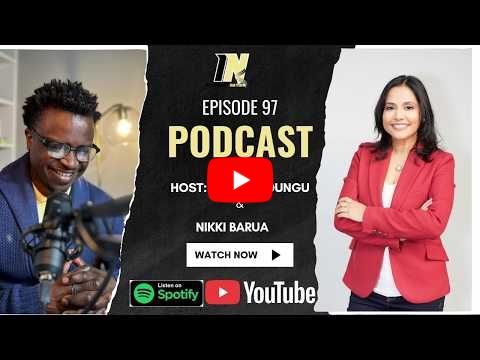
Your current circumstances have zero power to dictate your ultimate trajectory. In this podcast conversation, I break down the complex mechanics of identity shifts, courage, and high-agency leadership. If you’ve ever questioned whether you are enough, this episode will remind you that transformation begins the moment you decide that you are.
|
What obstacle are you treating as a wall instead of material for what you're building next?
Until next time...stay curious!

Cheers,
Nikki
PS: If this sparked something, reply back or share it on LinkedIn. These conversations matter.
